

 Myopia management
 Glaucoma Management
 Locate Us
Visual Field Testing vs. Standard Eye Exam: Key Differences
Blog:Visual Field Testing vs. Standard Eye Exam: Key Differences
Visual Field Testing vs. Standard Eye Exam: Key Differences
When it comes to protecting your vision, regular eye exams play a critical role. However, not all eye tests serve the same purpose. Many patients are familiar with a standard eye exam, but fewer understand visual field testing and why it may be recommended. While both are essential tools in eye care, they evaluate very different aspects of your vision.
Understanding the differences between visual field testing and a standard eye exam can help you better appreciate how comprehensive eye care works and why your optometrist at Texas State Optical may suggest one or both.
What Is a Standard Eye Exam?
A standard eye exam is a comprehensive evaluation of your overall eye health and visual clarity. This is typically what patients think of when scheduling their routine annual eye appointment.
During a standard eye exam, your optometrist will:
Check visual acuity to determine how clearly you see at different distances
Assess refractive errors such as nearsightedness, farsightedness, and astigmatism
Evaluate eye coordination and focusing ability
Examine the health of the front and back of the eye, including the retina and optic nerve
Screen for common eye conditions like cataracts, macular degeneration, glaucoma, and diabetic eye disease
Standard eye exams are essential for maintaining clear vision, updating prescriptions, and detecting early signs of eye disease - often before symptoms appear.
What Is Visual Field Testing?
Visual field testing focuses on a specific aspect of vision: your peripheral (side) vision. Rather than measuring how clearly you see straight ahead, this test evaluates how well you can detect objects outside your central line of sight.
Visual field testing is commonly used to:
Detect and monitor glaucoma
Identify optic nerve damage
Evaluate neurological conditions affecting vision
Assess vision loss caused by stroke, brain injury, or tumors
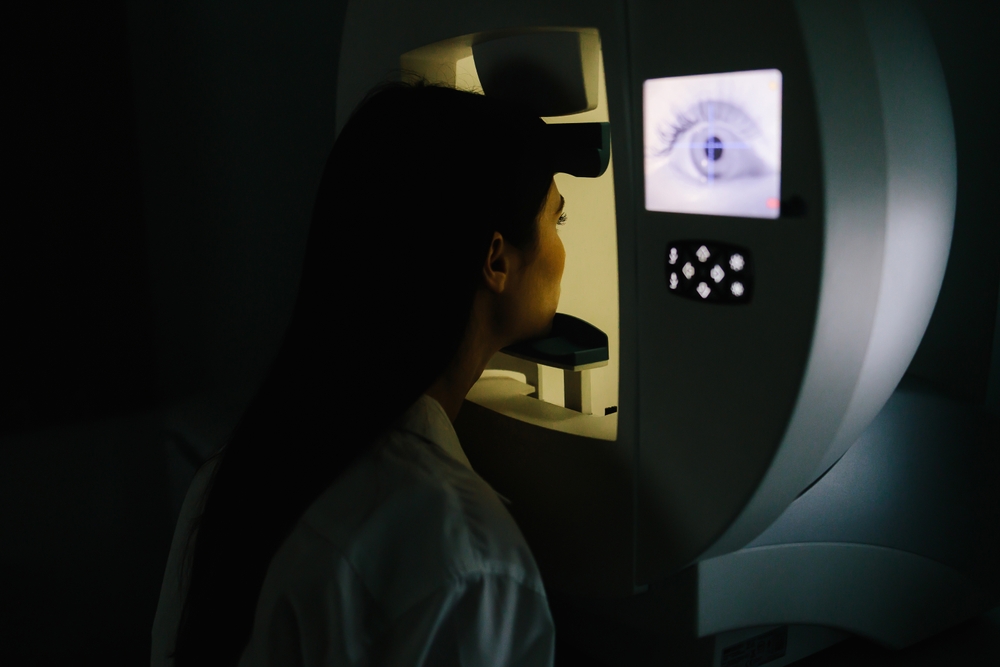
During the test, you’ll be asked to look straight ahead while responding to lights or shapes that appear in your side vision. The results create a detailed map of your visual field, helping your eye doctor identify areas of vision loss that may not be noticeable in daily life.
Key Differences Between Visual Field Testing and a Standard Eye Exam
While both tests are important, they serve different purposes and provide different information.
Focus of the Test-
A standard eye exam evaluates overall eye health and visual clarity. Visual field testing specifically measures peripheral vision and visual sensitivity.Conditions Detected-
Standard eye exams screen for a wide range of vision and eye health issues. Visual field testing is especially valuable for diagnosing and managing glaucoma and neurological conditions.When They’re Used-
Standard eye exams are typically performed annually or as recommended. Visual field testing is ordered when there’s a medical reason - such as suspicious optic nerve findings, elevated eye pressure, or existing eye disease.Level of Detail
Visual field testing provides a highly detailed analysis of vision loss patterns, while a standard eye exam offers a broader overview of eye health and function.
Why You Might Need Both
In many cases, visual field testing complements a standard eye exam. A routine exam may reveal early signs of a condition, while visual field testing helps confirm a diagnosis or track progression over time.
For example, glaucoma often develops without noticeable symptoms. A standard eye exam may show changes in eye pressure or the optic nerve, but visual field testing can reveal subtle vision loss that confirms the diagnosis and guides treatment decisions.
Schedule Your Comprehensive Eye Exam at Texas State Optical Today
Both standard eye exams and visual field testing are vital components of comprehensive eye care, but they serve different roles. A standard eye exam helps maintain clear vision and overall eye health, while visual field testing provides crucial insight into peripheral vision and disease progression. Together, they allow your optometrist to detect problems early and protect your long-term vision.
If it’s been a while since your last eye exam - or if you’ve been advised to undergo visual field testing - Texas State Optical is here to help. Visit our office in Humble, Texas, or call (281) 399-4275 to book an appointment today.
Quick Links
Helpful Articles

All Eyecare Services
We offer a wide variety of eye care services to the Humble community. Contact us with any questions about our services.

Keep In Touch
For non-urgent questions or to learn more about our services, contact us today!

Contact Information
Office Hours
- Monday 9:00 AM - 5:30 PM
- Tuesday 9:00 AM - 5:30 PM
- Wednesday 9:00 AM - 5:30 PM
- Thursday 9:00 AM - 5:30 PM
- Friday 9:00 AM - 5:30 PM
- Saturday* 9:00 AM - 3:00 PM (1st and 3rd Saturdays only)
- Sunday Closed
*Open 1st & 3rd Saturdays of the Month
- Monday
- Tuesday
- Wednesday
- Thursday
- Friday
- Saturday
- Sunday
- Monday
- Tuesday
- Wednesday
- Thursday
- Friday
- Saturday
- Sunday
© 2026 Texas State Optical. All rights Reserved - Accessibility Statement - Privacy Policy - Sitemap
Managed and Designed by 